Episode summary
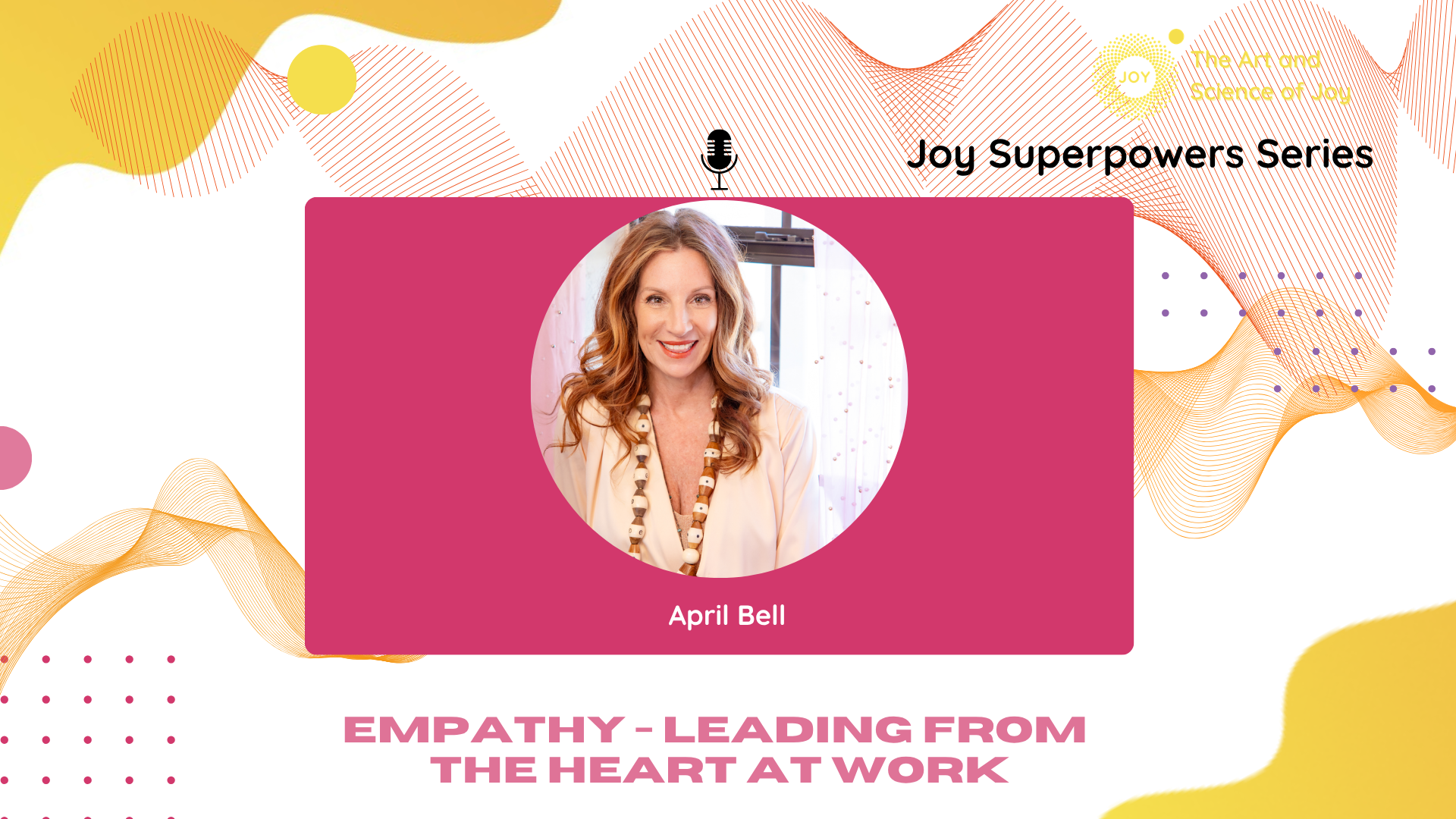
What does it really mean to lead from the heart at work — and why is empathy a strategic leadership skill, not a soft extra? In this episode of the Joy Superpowers series, Andrew speaks with April Bell about empathy, safety, presence, and heart-led leadership in the workplace. April shares how more than two decades of listening deeply to people shaped her understanding of empathy, why leaders often struggle to stay connected under pressure, and how curiosity, self-awareness, and shared meaning can help teams move from chaos into connection, alignment, and action.
About April
April Bell is a researcher who listens for a living. In 22 years and more than 18,000 hours of empathy interviews, she has helped some of the world’s biggest brands discover what their customers feel beneath what they say. She founded Made With Empathy to bring that listening discipline inside organizations, working with leaders on innovation, culture change, and the craft of leading from the heart. April is also the author of The Fire Starter: Igniting Innovation with Empathy and holds an Executive MBA from SMU.
In this episode
April reflects on how her relationship with empathy changed when she realized that, although she practised empathy professionally, she was struggling to offer it in the same way to herself and in her closest relationships.
She defines empathy as an internal knowing: knowing and accepting the experience of yourself or others with acceptance.
Andrew and April explore the difference between empathy and sympathy, including April’s view that empathy involves presence, detachment, curiosity, and understanding without trying to control.
April explains why safety matters so deeply: when leaders feel safe within themselves, they are more able to access play, curiosity, presence, and empathy.
The conversation explores how leaders can create safety for others, including through simple practices such as pausing, breathing, and helping a group reconnect around shared meaning.
April shares a story from a research project where a tense moment was transformed when a leader paused, breathed, and asked the group what success looked like for each of them.
She describes heart-led leadership as a result of empathy: when heart and mind are integrated, leaders are better able to make wise, holistic decisions.
Andrew and April discuss the challenges of leading empathetically in virtual environments, where people can more easily wear masks and leaders may miss signals they would notice in person.
April offers two practical questions leaders can ask before a meeting or engagement: how do I want people to feel afterwards, and who do I need to be for them to feel that way?
The conversation reframes empathy as strategic, not soft, with April arguing that strategic empathy helps leaders take people with them rather than dominate, control, or become overwhelmed.
April identifies loneliness and perfectionism as major barriers to heart-led leadership, especially when people isolate, fear asking for help, or believe they must get everything perfect before connecting with others.
The episode closes with April’s view that empathic intelligence is a requirement for this day and age, especially as leaders guide people through uncertainty, fear, and change.
Key takeaways
Empathy begins with internal knowing: understanding and accepting the experience of yourself or others.
Heart-led leadership grows from empathy when heart and mind are integrated.
Safety helps leaders become more present, curious, playful, and empathetic.
Strategic empathy helps leaders build connection, shared meaning, alignment, and action.
Loneliness, perfectionism, pressure, and fear can block empathy at work.
Heart-led leadership helps people move together toward a shared vision rather than simply complying with tasks.
Memorable lines
“Empathy is an internal knowing.”
“How do I want the people I’m talking to to feel after this engagement?”
“Strategic empathy is the defining difference between leaders who can take their teams along with them.”
“Empathic intelligence is a requirement for this day and age.”