Episode summary
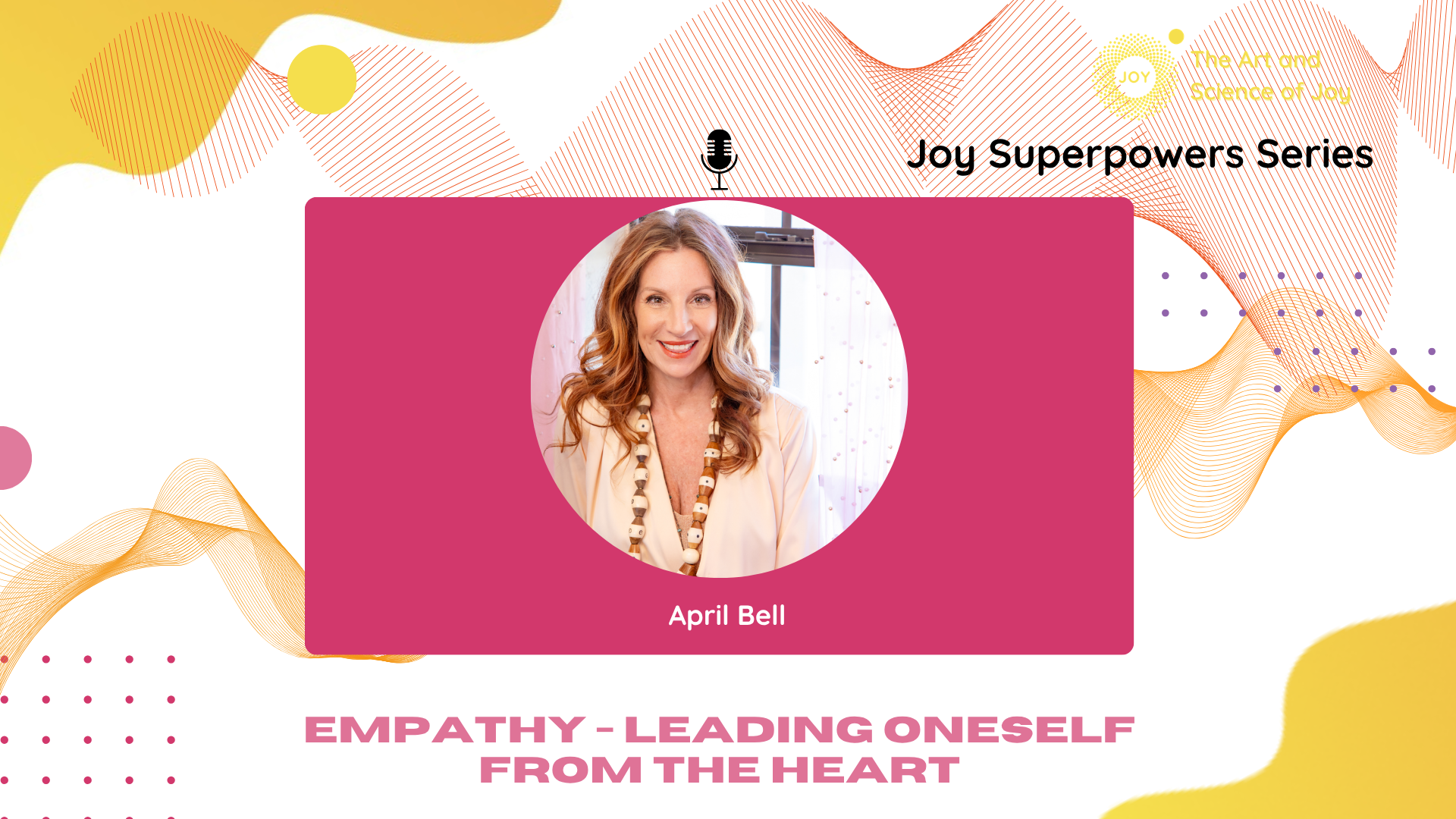
What happens when we turn the power of empathy inward? In this episode of the Joy Superpowers series, Andrew speaks with April Bell about self-empathy, living in alignment with your heart, and why the way we relate to ourselves shapes the way we relate to everyone else. April explains why empathy is not about fixing, solving, agreeing, or judging, but about being moved by emotional truth with presence and acceptance. Together, Andrew and April explore self-criticism, people-pleasing, emotional suppression, body awareness, self-acceptance, and the small daily practices that help us return to alignment, purpose, and joy.
About April
April Bell is a researcher who listens for a living. In 22 years and more than 18,000 hours of empathy interviews, she has helped the world’s biggest brands discover what their customers feel beneath what they say. She founded Made With Empathy to bring that listening discipline inside organizations, working with leaders on innovation, culture change, and the craft of leading from the heart. Her work spans research, facilitation, and coaching, because the leaders who could read consumers best kept asking her how to read themselves. April is the author of The Fire Starter: Igniting Innovation with Empathy and holds an Executive MBA from SMU.
In this episode
April begins by revisiting what empathy is and is not, emphasizing that empathy is not fixing someone’s emotional experience, solving it, agreeing with it, or judging it.
She explains why self-empathy deserves its own episode: people who are highly empathetic toward others can sometimes find it hardest to offer that same acceptance to themselves.
Andrew and April explore the link between self-empathy and people-pleasing, especially when caring for others is not balanced by healthy boundaries and inner alignment.
April reflects on her own journey, including the realization that the empathy tools she used professionally also had to be turned inward through therapy, self-acceptance, and reduced self-judgment.
The conversation explores why constant criticism may drive achievement, but does not create the same kind of sustainable growth as acceptance, allowance, and compassion.
April describes empathy as a catalyst for allowing emotions to surface without judgment, creating the possibility of release, lightness, and joy.
Andrew and April discuss the importance of detachment: recognizing that we experience emotions, but are not defined by them.
The episode explores the difference between self-esteem and self-compassion, including the trap of measuring worth through external judgment, achievement, or self-talk.
April shares the idea of inner alignment across different parts of the self — mind, heart, body, and spirit — and how empathy helps those parts work together.
She offers practical self-empathy practices, including journaling, recording yourself speak, breathing through fear, scheduling time for yourself, noticing the body, mirror work, self-hugging, sunlight, Yoga Nidra, and short reset alarms during the day.
The episode closes with a reflection on grace, emotional truth, purpose, and the possibility that the more we allow ourselves to feel all our feelings, the more joy we may be able to experience.
Key takeaways
Self-empathy is essential because empathy for others is harder to sustain when we are harsh, critical, or judgmental toward ourselves.
Self-acceptance can create more meaningful change than constant self-criticism.
We are not our emotions; we are human beings experiencing emotions.
Self-compassion helps us move from judgment toward worthiness, wholeness, and alignment.
Living in alignment with the heart requires listening to the mind, body, heart, and spirit.
Small practices — breathing, journaling, pausing, scheduling time, and offering ourselves grace — can help build self-empathy over time.
Memorable lines
“Empathy is not fixing someone’s emotional experience.”
“Self-acceptance is a more beneficial way for change to occur than constant criticism.”
“You are not your emotions.”
“I am worthy because I exist.”
“The more you can feel all of your feelings, the more joy you will experience.”