
Episode summary
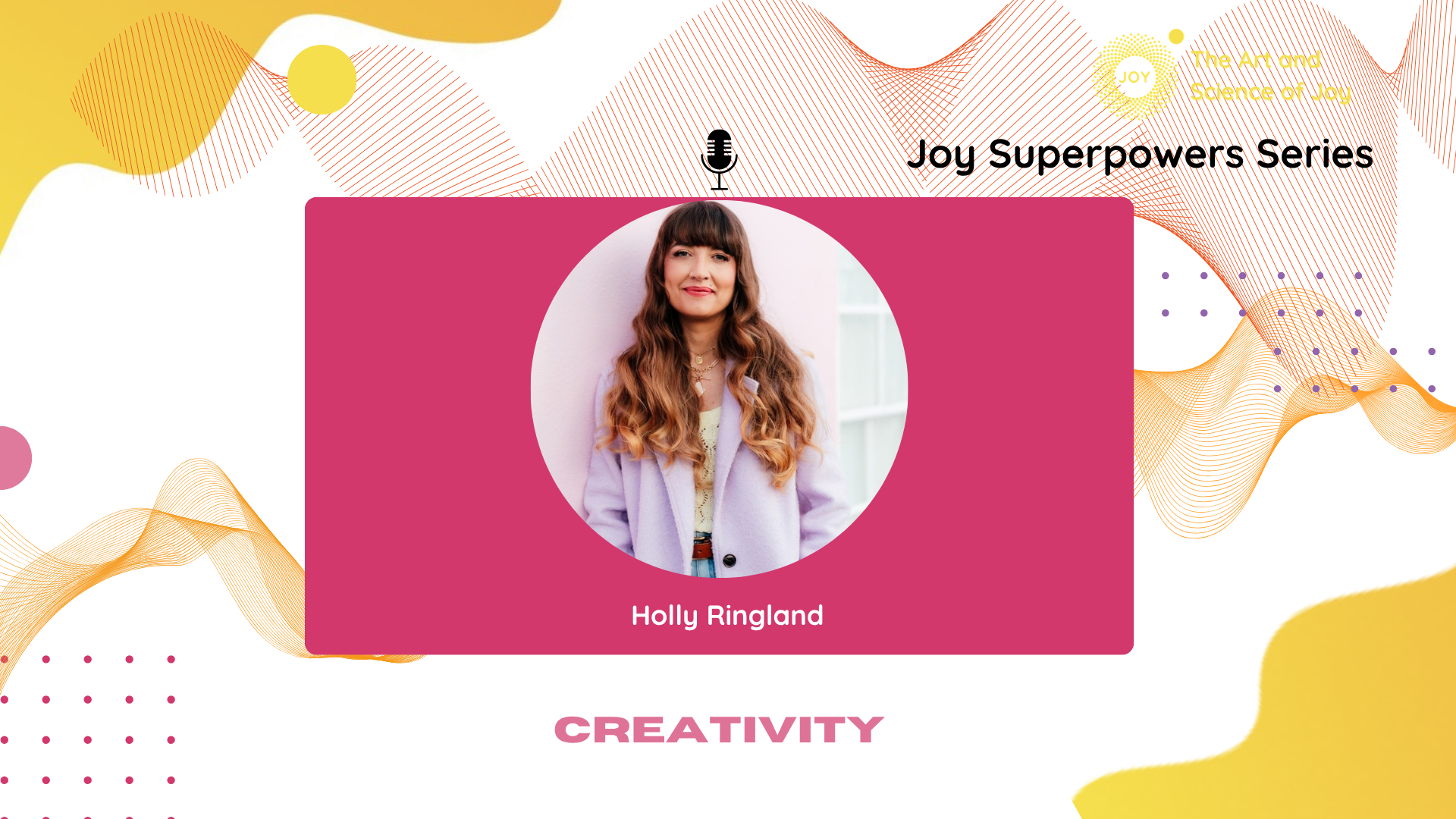
What happens when creativity becomes a pathway back to joy, belonging, and ourselves? In this episode of the Joy Superpowers series, Andrew speaks with international bestselling author Holly Ringland about creativity, imagination, storytelling, safety, and the inner “house” we can build for joy. Holly shares how losing her sense of belonging and joy eventually led her back to the books, gardens, stories, and imagination that had lit her up as a child — and why creativity belongs to all of us, not only those who call themselves artists.
About Holly
Holly Ringland is an international bestselling author of The Lost Flowers of Alice Hart, The Seven Skins of Esther Wilding, and The House That Joy Built. She is also a writer, storyteller, TV presenter, and creator of the bestselling Substack The Joy Rise. Holly lives and writes on Bundjalung Country in southeast Queensland, Australia.
In this episode
Holly reflects on reaching her own personal “ground zero” at 29 after leaving cycles of violence and realizing she had lost her sense of joy, belonging, and connection to herself.
She shares how childhood memories became a pathway back — from her grandmother’s storytelling and Queensland gardens to learning to read with her mother at three years old and deciding she wanted to become an author.
Andrew and Holly explore the relationship between light and darkness, and Holly’s belief that joy and grief are not opposites but experiences that can exist alongside one another.
Holly tells the story behind The House That Joy Built and how conversations with readers about fear, trauma, and creativity inspired her first nonfiction book.
She shares the simple question she placed on her office wall while writing it: “What if I can?”
The conversation explores the power of stories to connect us across generations and help us remember parts of ourselves we may have left behind.
Holly describes the idea of creating an inner house of joy — a safe place within ourselves where imagination can be accessed and creativity allowed to grow.
She challenges the belief that some people simply are not creative, pointing instead to the imagination already present in everyday acts of cooking, caring, humour, music, daydreaming, and connection.
Holly reflects on the fear that once prevented her from writing and how confronting the reality of mortality helped her recognize how limiting that fear had become.
The episode closes with the reminder that our inner creative world is not fixed: we can change what is not working and become the builders of our own imagination.
Key takeaways
Creativity, joy, and belonging are deeply connected.
Childhood sources of joy can offer clues to parts of ourselves worth rediscovering.
Creativity is not reserved for artists; imagination is an innate part of being human.
Safety can provide an important foundation for creativity, self-expression, and joy.
Fear can protect us, but it can also prevent us from creating.
Small “what if?” questions can open the door to possibility and action.
Memorable lines
“What if I can?”
“We are born with imagination.”
“There are some kinds of beauty that can only be found in the darkness.”
“We get to be the boss of our own imaginations. What a thing.”


