Episode summary
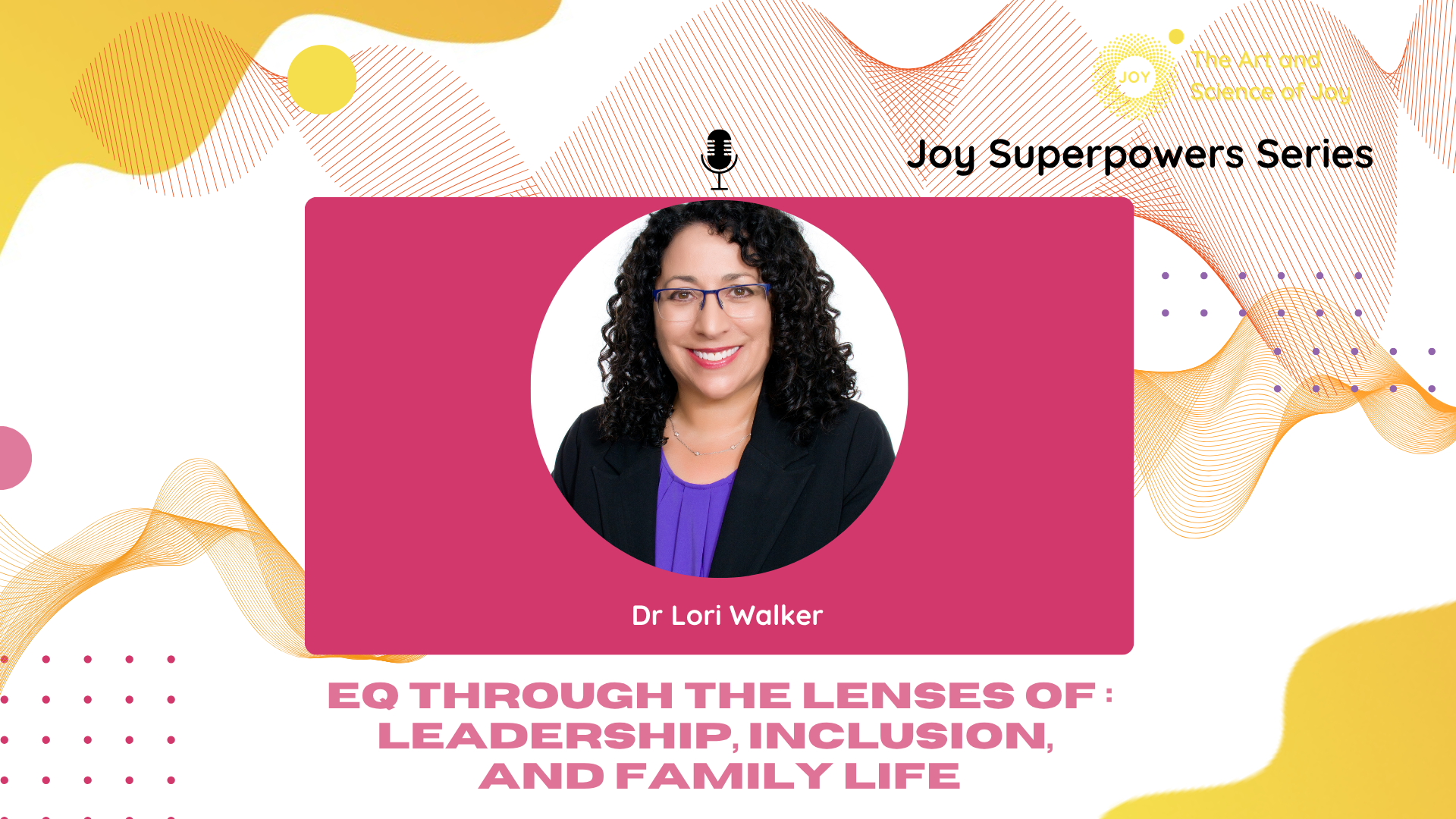
What does emotional intelligence look like in real life—not just as a concept, but in salary negotiations, stressful meetings, moments of inclusion, and family tension? In this episode, Andrew speaks with Dr. Lori Walker about EQ through three lenses: leadership, inclusion, and family life. Lori shares why asking a good question can shift outcomes, how psychological safety grows through curiosity and genuine care, and why some of the strongest EQ moves are also the simplest: pause, breathe, listen, and make space for others to speak.
About Lori
Dr. Lori Walker is a leadership scholar, RIVA-certified Master Moderator, and qualitative research expert. Her work focuses on inclusive leadership, psychological safety, and helping leaders create environments where people feel heard and can do their best work. Her doctoral research centered on how leaders create psychological safety in diverse teams.
In this episode
- Lori’s plain-English definition of EQ: awareness of your own emotions, awareness of others’ emotions, and using that information to manage situations and relationships.
- A salary negotiation story in which one question—“Where did you come up with your number?”—opened the conversation and led to a $10,000 increase in base salary.
- What low EQ looks like under stress: blame, escalating emotions, defensiveness, arguing, bullying, and poor awareness.
- What high-EQ leaders do instead: slow down, ask questions, invite others to speak, set boundaries, and create calmer conversations.
- Why EQ matters for inclusion: Lori explains that inclusive leaders build belonging through curiosity, empathy, appreciation, and genuine care.
- A story about recognition at work, where some employees called in sick to avoid public praise—showing why recognition should not be one-size-fits-all.
- How EQ shows up at home too: noticing triggers, asking better questions, and looking for the “strings you can pull” to open deeper conversations.
- Lori’s view that one of the smallest actions with the biggest ripple is to take a breath, put down the phone, and make eye contact before asking a good question.
Key takeaways
- Asking a good question can change the direction of a difficult conversation.
- EQ is something that can be developed through practice at work and at home.
- Inclusive leadership means understanding that different people need different forms of recognition, feedback, and support.
- Repair matters: a pause, a genuine apology, and a curiosity-led question can help restore connection when things go wrong.
Memorable lines
“When in doubt, ask a good question.”
“You cannot fake caring.”